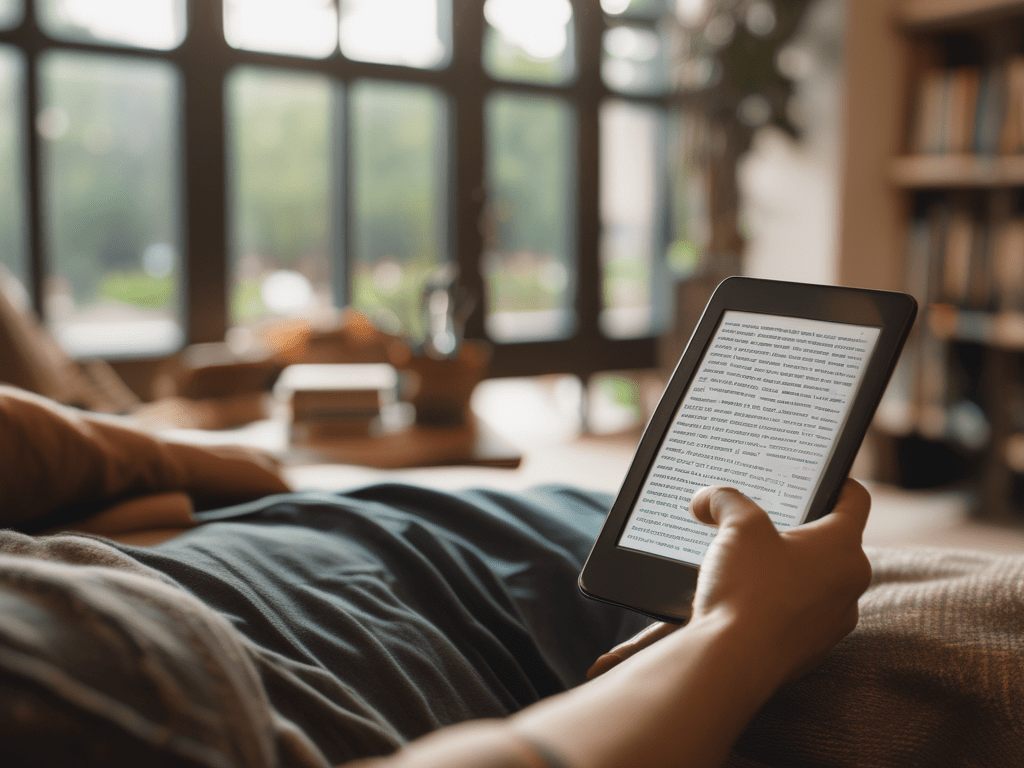
If you asked me a year ago if I would ever touch a kindle I would’ve laughed right in your face. I am a die hard paperback girly. Nothing feels better than holding a fresh book in your hands while sipping on your favorite coffee. The success and pride you feel when you turn that last page. Now while all of that is still true and I still am a die hard paperback girlie I would be lying if I said I wasn’t pleasantly surprised by the kindle.
I bought myself a refurbished kindle off of Amazon when I moved out of my moms to do a temporary internship in Florida. While I wish I could’ve taken all my books with me, we all know how much of a pain TSA can be so I had to leave them behind. For me I was very skeptical at first. I was like “I’m going to hate it” or “maybe it was a waste of money” however I could not be more wrong.
My main issue aside from me having a texture thing with turning the pages was I was worried it was going to bother my eyes reading on a tablet. The Kindle even though it’s an electronic device the screen looks like paper. Once I started reading on there I couldn’t stop. Now I haven’t fully converted I still read both paperbacks and kindle but there definitely are some perks to the Kindle. I have fibromyalgia and it makes it hard to read because my joints hurt so I have to put down the book. But the Kindle is light weight and its easier to read at night.
Another one of my favorite features is that it will tell you how much longer you have left to finish the chapter. I don’t know if any of you are super competitive but I am. So when I see every chapter is like 6 minutes long I’m like “okay I can do that” and next thing you now its 3 am and I just finished a 400 page book. True story that’s actually how I finished 3 books in 2 days.
That was my experience with it. If you are considering purchasing one here’s a good pros and cons list for you.
Pros:
- Lightweight and portable, making it easy to carry around, especially for travelers or individuals with mobility issues.
- E-ink display that mimics the appearance of paper, reducing eye strain during extended reading sessions.
- Convenient progress tracking, with estimated time to finish chapters, which can be motivating for some readers.
- Ability to store and carry a large number of books in one device, saving physical space.
- Accessibility features such as adjustable font sizes and screen magnification, benefiting users with visual impairments.
Cons:
- Some readers may miss the tactile experience and sensory satisfaction of flipping through physical pages.
- Potential for screen glare in certain lighting conditions, impacting the reading experience.
- Dependency on battery life and the need for recharging, unlike traditional paper books which require no power source.
- Limited support for sharing or gifting e-books, which can detract from the communal aspect of book sharing.
- Initial investment cost for the device, especially for higher-end models, may pose a financial barrier for some readers.
So to make a long story short, never forget the paper but also its good to accept some tech advances. Not saying you have to get one just recommending it. Especially if you travel a lot or have mobility issues such as myself. Hope this will help some of my fellow readers Happy reading! Don’t be afraid to try new things.
 Destiny's Dreamland
Leave a comment